unsettled

I sat down to write today, remembering I still had one more post I wanted to do to finish off my series on expectations. I don’t think I’m going to do it. I realize I could write about expectations a lot more, and the last topic is one that I think would be too much like the others. And while I’ve enjoyed the consistency of doing a blog series, I go back and read them and see what sounds like a self-pitying martyr. I don’t want that.

So here I sit, staring at a blank white page on my computer screen, knowing that writing is just as much a discipline as it is an art. That’s why it often hard for me to go back and read some of what I wrote. It’s not great writing, but it is self-reflection, which, as you may remember, is what I feared would go away in my life once I moved here and entered a different environment, one that didn’t have that focus like my time in St. Louis did.
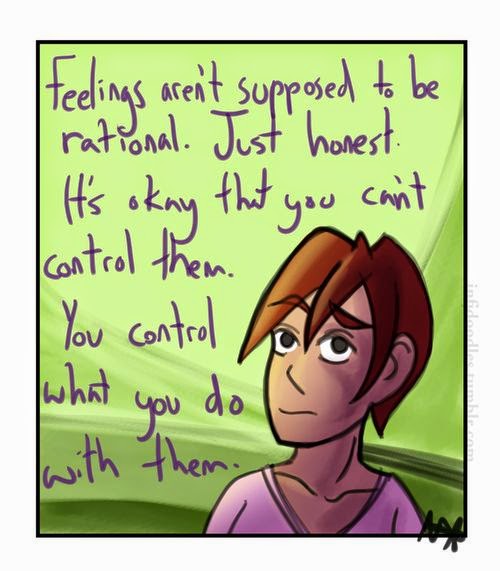
I’m wondering if I’m doing too much self-reflection, and there is nothing attractive about navel gazing. Then I remember the importance of offering myself grace, because, after all, I practice my words here. I don’t have this life figured out. I’m in the process of screwing up things in my job, my relationships….heck, I can’t even get around to getting my yard work done. I’m a complete mess. 


There is something not right in my spirit. I’d been feeling this way all week as I worked on a message for church, something I normally enjoy (hard as it is). But I struggled all week, and not in the normal way I do when I have a big message to give. The week is normally a mess of emotions, research, frustration, napping and chocolate eating. Not this time. This time I was apathetic.

After a trying emotional experience Thursday afternoon, something shifted in me. And I still haven’t been able to figure it out. I’ve read that INFJ’s often think in pictures, yet we only understand what we feel after we’ve written about it. (This is most often the case with me.) We utilize both side of our brain with equality… so basically, both emotions and logic try to rule us. That’s not very fun. It means I don’t always know which path to follow in order to figure it all out. The logical and straight path? The creative and winding side? Beats me. So I sit in this anxiety, and it feels like something is under my skin that I just can’t scratch enough to get relief.

Halfway through giving my message yesterday, I realized that what I was struggling with involved the fact that I had not yet connected to what I’d written. There were parts that were emotional for me (as always) but I hadn’t hit that groove… it’s hard to explain, but when teaching Scripture, there is a point where you realize that the work and research you did had the Holy Spirit’s fingerprints all over it. I didn’t have that moment until yesterday morning and I didn’t like that it took that long. All weekend, I had this itchy anxiety that I could not place. That i couldn’t name. That I couldn’t put in a neat little box, label it and put it away on a shelf. I didn’t want to give the talk, I didn’t want to go to work, I didn’t want to be here.


I still don’t know what this anxiety is rooted in, but I am fearful of what I suspect it is rooted in. Experience tells me it will eventually reveal itself, but only after I spend time connecting some dots. I know that when I connected with the words I wrote, while I was speaking them, that a big part of that connection simply comes from it being my call. God has called me to teach. So perhaps that connection happening, despite my apathy, is simply because of God’s graciousness towards me. I can only pray for the same grace as I sort out what is not right in my spirit at this moment.

crushing grapes

There is something powerfully heart-crushing about realizing you don’t mean as much to someone as they mean to you. If you’ve been reading around here for a while, I’m a pretty intense feeler, particularly since the beginning of this year, when I finished writing the talk I gave for the Women2Women conference, and made a significant breakthrough: that we are completely known and loved by the God of the universe (anyway), and to feel and understand that kind of love on earth we have to let yourself be known by others.

This caused me to be very intentional with my communications with others, my best friends and co-workers, the friends with which I feel a kinship and the family members whom I love. It’s had varying results, to be sure. It’s been painful, without question… which is where I come to the “heart-crushing” part.


You know that awkward moment when you’ve carefully and thoughtfully picked out a Christmas gift for someone and you didn’t get anything from them? That’s what this is like… when you realize that the connection you had to the other person just isn’t there on their side. While this may not be intended to feel like rejection on their part, it makes us feel rejected. It’s a lot like being in a relationship and saying “I love you” without getting it back from them.

“I gave her my heart and she gave me a pen.”

These are the moments when ask ourselves, was it worth the risk I just took? The risk to let a person see me, let a person inside my heart, and let them walk around the swampland of my soul?

I once read a devotional by Oswald Chambers, in this book, about grapes. Grapes turn their sweetest when they are crushed and squeezed to make wine. “God can never make me wine if I object to the fingers He uses to crush me,” he says. “…when He uses someone who is not a Christian, or someone I particularly dislike, or some set of circumstances which I said I would never submit to, and begins to make these the crushers, I object.” It is in moments like these, when I’m wondering if the risk was worth it, that I must remind myself that it’s not about the risk. It’s about what the risk taught me. How the risk made me sweeter wine. How being in full allegiance to God is about the sanctification process… the process that will change us. It will hurt (pruning always does) but will make better fruit.


“Let God do as he likes,” Chambers says. “If you are ever going to be wine to drink, you must be crushed. Let God go on with His crushing, because it will work his purpose in the end.”

I don’t like being crushed. I particularly don’t like being crushed by people, especially people I’ve let know me. I also know that putting the weight of my hopes and longings on the people I love will crush them with my expectations. (I think Tim Keller said a version of this somewhere.)

I think what I find so difficult about this is when I want that person to be part of my hopes and longings. I want them in there with me. And when they choose not to come – when I find out they mean more to me that I do to them – that’s when I find myself getting crushed, desperately not wanting to be poured out into sweet wine. Because that means they probably aren’t with me anymore. And that is heart-breaking.

pastors and expectations [living life without expectations]


My sweet friend over at Kansas Bob suggested I write about this topic, and I hardy feel like an expert, since I am not a pastor. But I have seen the inner workings of a few churches and have seen the struggle pastors go through in leading a church. And the biggest of those struggles, most certainly, involves expectations.

I believe the most damaging expectation I’ve seen people have of their pastors, interestingly, also seems to be an umbrella for all other expectations and it’s this: that pastors are to be all things to all people.

[But that’s in the Bible, Stephanie! How can it be a damaging expectation?]

Simple: context. Paul wrote that in 1 Corinthians regarding his missionary work: to convert Jews. He was a Jew, raised in a Gentile culture. His purpose in life was to evangelize. Not pastor. He related to others so that some might be saved. Is this all that different from what it means to actually pastor a church, though? A good and fair question, and certainly as I’ve witnessed a lot of under and over functioning leaders in church, I’ve had to ask myself, “What is required?”

I’ve heard some say that a pastor is not a shepherd. Jesus is the ultimate shepherd of the church and the pastor is to be a sheepdog. I could not disagree with this more. This implies the pastor’s primary function is to just herd and guard the sheep. For a quick easy pop culture reference, think back to Babe, and how the sheep dogs just yelled [barked] to get the sheep to move and go. I don’t want a pastor to lead me that way and I certainly don’t see how the description of an elder in Titus and 1st Timothy support this theory.

But a shepherd? A shepherd tends. He feeds. He goes after the lost… he oversees. Oversees with love and care. Tending and feeding a flock is much different than simply herding and guarding.

Is he required to do this alone? No. That’s why there are staff members and ministry leaders in the church to help out. Because when a pastor tries to do it all himself, he turns into a superhero leader. The problem is exacerbated when we have superhero expectations of our pastor and think he should do it all.


Rarely would you hear a person use that term “hero” to describe their pastor, but if you listen to them talk about him, you’ll hear it. “That sermon was amazing. I don’t know how he does it!” “His family is so precious. They are doing such a good job of raising those kids! It’s wonderful!”

And then there is the negative side of this superhero pedestal. “I can’t believe he hasn’t called me back yet. He’s my pastor!” “Did you hear about what he said about so and so?” or the “Did you hear what he did?” or the “I can’t believe he hangs out with________” followed closely by, “That isn’t appropriate for a pastor.”

This is tricky, because should pastors be held to a high standard? Yes. Not many of you should become teachers, my brothers, for you know that we who teach will be judged with greater strictness. (James 3:1)

But we often fail to quote the following verse (we tend to do that when it doesn’t help drive our point home): For we all stumble in many ways…

It’s hard for men to fail. Perhaps because in the garden, they not only failed God and themselves, but they also failed Eve. The everyday failures of life have to do with the expectations men have of themselves, their family has of them, and then you add this whole group of people that pay your salary? That is not easy to deal with, and because pastors often have a deep feeling personality type, it can become consuming for them.  The superhero mentality forms. When there is failure, they are judged harshly that I’ve seen pastors form a hard shell around themselves, compartmentalizing their lives so that their life looks good on the outside, no matter what is going on inside. (Yikes… Matthew 23:27, anyone?)

And as long as we as congregation members perpetuate the superhero expectation, pastors will continue to feel the pressure to become that superhero.

Going on vacation? Too bad. I need you to come back and do my grandmother’s funeral. 

We have deacons and associate pastors in our church? Doesn’t matter. I want the senior pastor to visit me in the hospital.

I’m going through a tough time, and my church friends are being really supportive, but after all that I’ve done for the church, shouldn’t the senior pastor reach out to me?

We expect our pastors to:

  •          Preach a killer sermon each week.
  •          Have a perfect family with well-behaved children.
  •         Have a wife that either runs the children’s ministry or plays piano in worship.
  •          Be available at the drop of a hat.
  •          Help us when we expect it. But in the ways we want, not in the ways that he deems best.


We expect them to be plumbers, electricians, custodians, singers, intellectuals, comedians, best-selling authors…

… relatable, down-to-earth, walking encyclopedias about the Bible, teachers, shepherds, administrators, hospice care workers, counselors…

Did I miss anything? I’m pretty sure I did.

We may say, “I know pastors are human beings.” But when the rubber meets the road and that pastor acts like a human being (and maybe even falls off his white horse) we struggle with it. When he doesn’t do what we want, all of a sudden he isn’t a good pastor.

Shouldn’t he know better? He’s a man of God. He’s a pastor.

This is sobering. It’s sobering because I’ve witnessed it, I’ve felt it and I’ve done it. That’s not okay. Change must start with me. I’m not done on this topic, I don’t think. It’s time for me to examine myself and we’ll see what the Holy Spirit says. Because change always starts with one.

shame and expectations [living life without expectations]

 

Have you ever been at a crossroads with a friend? Where you are sensing that the friendship just isn’t good for you and that it’s time to set it down and leave it behind?

I’ve been in that place a few times. I think I may be approaching it right now. And as I sat down to write my next post on expectations, I saw that the next topic on my list was about shame. And because I’m me, I found a connection between the two.

The famous “vulnerability TED” Brené Brown did a second TED talk called “Listening to Shame” and when I first made the list of topics to write about on living life without expectations, I wrote, from her talk, “Vulnerability is not weakness. It’s courage.” I’m not entirely sure I know what I was thinking when I connected it to the idea of living life without expectations, but I do know that right now, in my own life, there is significant shame connected to the expectations I have with the aforementioned friend.

This shame looks embarrassing. I picture it living in the corner of some room in my heart, all shriveled up and pathetic. Hiding from that side of me that wants, more than ever, to grab a shotgun and blow it up. But it’s also in there smirking, knowing that I won’t have the courage to do that, because every time I walk into that room it HURTS with every fiber of my being.

I stand at this crossroad, and one road is labeled “this is probably bad for you” and the other road says ‘I really love them and want them in my life.” I am feeling shame. I am remembering the times I was vulnerable and honest with them. I am remembering the times they promised something and how they didn’t come through, and I feel stupid for believing them. I am remembering the expectations I had that caused me disappointment. And I. am. ashamed.

Shame focuses not on the behavior (like guilt) but focuses on the self. I feel shame because of this friend, which means that I am ashamed of who I am. Honestly, if I can parse this, I am ashamed of who I am with them. Yikes. That’s a whole other post.

I’ve allowed myself to be vulnerable with this friend and they let me down. I trusted them with some hard things, and the only return I get are a few text messages. (And a failure to acknowledge my birthday. I’m trying not to behave like a 12 year old here, but, alas, I am.)

I opened up myself to a person who I thought deserved it. And I am so very ashamed at just how wrong I was. Yes, I have expectations. I worry sometimes they are unfair to the other person. I’m also concerned that not having the rights ones are unfair to me.

“Vulnerability is our most accurate measure of courage.” This statement of hers blows me away, but then I remember what courage looks like. Today, we are so fearful of people really seeing us that I believe the gutsiest thing you can do is to let someone in. But when rejection comes, that shame grows. It may still hide in the corner, but it gets bigger. It stands up straighter, gets a little bolder, and before you know it, it’s looking you right in the eye and saying, “You are not enough.”

Get me my shotgun.


some thoughts on Noah, God’s Not Dead and art [part 2]


Does God really need someone to defend his honor?


That is the question I’ve been asking myself since I watched God’s Not Dead. I’m still not sure I have the answer yet, because I know in my heart it is not a “yes or no” simple kind of answer. But that is the question the movie left me with, and partially because of the arrogance and presumption that God does need someone to defend him is stated in the film. Are we called to defend our faith? (Of course. The Bible tells me so.) But the thought that God needs anything from us causes a holy and righteous anger in me, because I believe in an omnipotent God. He doesn’t need a thing from me. But he does want something from me. It may be all semantics… but important ones, because wrong semantics can shift our view of God. And there are just so many dangers in this.

Which is just one of the many issues I have with God’s Not Dead. Bad theology will always be something I desire to fight against, and mainstream Evangelical Christianity has a plethora of it. Spend 30 minutes listening to the lyrics on K-LOVE and you’ll get a solid dose right there.


I was warned about God’s Not Dead. From people whose opinion I trust and don’t trust; they are thinking Christians both conservative and liberal alike in their political and theological beliefs. Which I found fascinating. Since seeing the movie and expressing my opinions on it, I’ve been “beat up” for that opinion by those who loved the movie, which I guess isn’t too surprising. But I guess I also hoped to find places of grace and open dialogue where all opinions and thoughts could be expressed about film as art. I forget that not too many Christians see it like this. They defend a movie because it has the label of “Christian” and all the bad stuff is forgiven or glossed over for the sake of the message. Is this the end justifying the means? Of course it is. I grieve at the lost art of critical thinking, particularly in the baby boomer generation, when it comes to art that has the label of “Christian.” (This is not meant to stereotype, but it has certainly been the majority of my experience at this point in my life, and was certainly proved with the conversations I’ve had about God’s Not Dead.)

Which honestly brings me right back around to my question: does God need someone to defend his honor?

Unlike this movie, I do not think every non-Christian is evil. I was saddened by the significant amount of stereotyping in the script, which leads to fear-mongering in the very worst way. All vegans have a vengeful streak against hunters! All Muslim fathers beat their daughters! All atheists are set on humiliating a dissenting voice with intellectual bravado!   

Which comes to what I found most offensive about this movie. [Spoiler alert]

Tasked with proving God is not dead to his Philosophy 101 class and professor, Josh fights back with mainly creationism arguments (sigh) but also with rhetoric so basic it’s no wonder his professor laughed at him.  It is in this debate (in a scene just between him and the professor, without the class present) that Josh learns the reason why his professor demanded the class sign a paper saying “God’s Not Dead.”

(Sidenote: seriously, there is not a singular professor, tenured or not, that would EVER get away with such a blatant lack of civil liberties. Even in our post-Christian culture. Nor would the basis for any Philosophy 101 class be atheism. But we suspend belief in all movies for the sake of the story. I get that. But still. Ugh.)

Josh learns that when his professor was 12 years old, he prayed to God to heal his mother. His mother still died. My heart broke in that moment, because I know so many with similar stories. Is the way to convince them that God isn’t dead to debate them? Nope. I just don’t buy it. The biggest and most offensive thing about this movie is how Josh then proceeds, in the next class period, to humiliate his professor by using this information. Thankfully, Josh doesn’t tell the class the story.  But Josh does push and push his professor until he breaks. Where does “clothing ourselves with compassion, kindness and humility” [to paraphrase Colossians 3:12] come into play here?

Josh had a significant opportunity to engage with his professor on a human level, and talk to him about that nature and character of God. He instead chooses to bully and humiliate him, just as his professor did to so many others. This is not the only way to speak up for your faith, Christians. This is a mostly useless way of proclaiming gospel truth to the world, and is a poor example of what it means to be Christ in the world.

What I will affirm about the movie:

1.)    The message that God is not dead, of course, is a true and powerful one. Is the medium the message for people who see this? I hope not. God is very much alive and working in my life and in the world right now.
2.)    Perseverance under great pressure. Josh pressed on, even when his girlfriend, also a Christian, pushed him not to. He chose to stand up for what he believed even though it could cost him a good grade. He dug his heels in, studied, and learned how to defend his faith. That is always a good thing, no matter who you are. I simply question the attitude and method that proceeded.
3.)    The gospel message is clearly stated, as well as the very important truth that all people have worth. Hooray!

What I will challenge; all of what I mentioned above plus:

1.)    Too many story lines. Each character was entirely one dimensional. Not-great writing and some pretty bad acting. Some potential great moments completely lost because there were so many storylines.
2.)    THE BIBLE IS CALLED AN INSTRUCTION MANUEL. I just can’t deal with that.
3.)    When the Newsboys pray with one of the characters, one of them actual says, “God, save her tonight.” UGH. She was saved on the cross. Not because a prayer was said. Again, semantics. But important ones. Who is doing the saving? Us in our prayers or Jesus? Solus Christus.
4.)    The arrogance. Oh my goodness, the arrogance.

Let us (Christians) remember that just because art is “Christian” does not make it good art. We want it to be, and I completely understand that. Here is one of the greatest takeaways I had from Denis Haack’s Film and Theology class: we are not starting a conversation. We are joining an existing one.

We should not be so concerned with starting (and in this movie’s case, stopping) the conversation, but graciously joining the conversation that is already out there.  Let us not just defend, but engage.