Initiating
 I’ve discovered something about myself recently that feels insurmountable.
I’ve been taking a class on Wednesday nights at my church on the book The Peacemaker by Ken Sande. As we finished up the book as a class, the last time we spent together was looking at confronting those who’ve hurt us and forgiving those who’ve hurt us. The further we delved into the material, and the deeper our discussion become, I realized why I’ve become a peace-faker instead of a peace-maker: I’m afraid of initiating in relationships.
I have on idea when this started, but one of my first thoughts is to blame it on Elizabeth Elliot. She was all the rage when I was in college, and I had the chance to hear her in a debate at the Urbana Missions conference regarding a woman’s place in the church/mission field. She has very traditional views on a woman’s place anywhere – in fact, she actually said during the debate that should would not speak in church unless she was with her husband. Yikes.
I read Quest for Love several years ago (I refused to read Passion and Purity out of principle), though Quest for Love was not much different, if what I heard about P & P was correct. One principle Elliot lives by is that a woman should never initiate relationships with men. If they are interested, they will pursue you. Makes sense, I guess. The problem is, I think I let myself believe that about everyone. Because now I don’t even initiate friendships.
I was talking about my realization with my women’s small group that meets on Mondays, and my dear friend Sue caught me afterwards and asked how she could help. once I talked with her about it, ever the goal-setter, she advised me to try “one a day”. Make one initiation a day, just help me get over this hump.
And then, a wave of situations arise in my life this week where I am rejected (passively, as far as I know, unless there are a lot of people in my life who just don’t want to be around me.) That does not help.
I don’t usually write a post unless I feel some closure on an issue. But I am at a loss right now, because I am in the midst of finals, figuring out my summer schedule, and am feeling unable to flesh this out, find the root and climb over the mountain. I’m aware of it now, so that’s something. But that’s not much after the week I’ve had.
I’m taking a ride off to one side
It is a personal thing.
Where?
When I can’t stand
Up in this cage I’m not regretting.
I don’t need a better thing,
I’d settle for less,
It’s another thing for me,
I just have to wander through this world
Alone.
Stop before you fall
Into the hole that I have dug here,
Rest even as you
Are starting to feel the way I used to,
I don’t need a better thing
(Just to sound confused)
Don’t talk about everyone,
I am not amused by you.
I’m gonna lose you,
Yeah I’m gonna lose you
If I’m gonna lose you, I’m gonna lose you,
Yeah I’m gonna lose you
If I’m gonna lose you
I’ll lose you now for good
Lectio Divina
Lectio Divina (praying through scripture) isn’t something I practice a lot. I first tried it last fall, as part of a book I read for my youth ministry class: Contemplative Youth Ministry (highly recommended, by the way.) I taught last week and will teach tomorrow the “Prayer of the Heart” lesson from Gospel Transformation at my church, so the practice of it came back into my life. So this is what happened….
I got comfortable, squished pillows all around me so they were just right. I opened up my bible to Matthew (we were to pray through The Lord’s Prayer) and put it in my lap. I focused on clearing my mind, quieting my heart.
Clearing my mind took FOREVER. I keep thinking of all the stuff I had to do. (I have a running list in my head) I thought about encounters I had with people throughout the week, good and bad. I thought about my family, classes, church, just stuff. And about 7 or 8 times, while trying to clear my mind, I had to jolt myself out of these thoughts and remind myself of what I was doing trying to do. I think at one point I actually said to myself “I’m trying to be contemplative. Can’t you just do that for one little bit, Stephanie?” Yeah, there’s some irony there.
So… once my mind cleared? I promptly fell asleep. I admit it.
The business of our days, the reality we live in, where a hundred things need to get done and another hundred things are required of us, never mind the emotional, relational stuff we have to deal with, keeps us in motion. I was so in motion that when I finally cleared my mind and quieted my heart to pray, I fell asleep. I am used to being consistently in motion. This requires more being, rather than doing. Lectio Divina is contrary to all of that. And frankly, it was hard for me.
Actually, if I’m being really honest with you and myself, just prayer in general is hard for me. It is not a discipline that comes naturally to me at all. (I guess that’s why it’s called a discipline, right?) I’ve always felt lesser for it, always wondered what was wrong with me that everyone else around me seemed to have this whole prayer thing figured out. I’ve reflected a lot this week about why prayer has always been hard for me. And I’ve realized it lies in one of my biggest idols: the idol of perfection.
Not only do I want my prayers to be perfect, but also I don’t want to admit to myself that I’m not. We all know we’re not perfect, but I have also come to realize that I still think I’m better than the next person. And if I pray from my heart for all of the things I desire and all of the things I lack, the more that idol of perfection rears it’s ugly head. I’m revealing the desires and the sin to myself just as much as I’m admitting it to God. The difference is that God already knew about all that stuff, whereas I just pushed it down further into the corners of my mind and probably hadn’t admitted it yet.
Hannah was a woman who wanted a son, but God’s hadn’t granted her one. Her husband’s other wife was able to bore children, and Hannah went to the house of Lord, the other wife provoked her until she wept – because she had children and Hannah didn’t.
1 Samuel 1:12-16
12 As she kept on praying to the LORD, Eli observed her mouth. 13 Hannah was praying in her heart, and her lips were moving but her voice was not heard. Eli thought she was drunk 14 and said to her, “How long will you keep on getting drunk? Get rid of your wine.” 15 “Not so, my lord,” Hannah replied, “I am a woman who is deeply troubled. I have not been drinking wine or beer; I was pouring out my soul to the LORD. 16 Do not take your servant for a wicked woman; I have been praying here out of my great anguish and grief.”
We all have things we pray for desperately. Just like Hannah wept bitterly and laid-bare her deepest most intimate thoughts and desire to God, we have issues and people and sin that press on our hearts. Sometimes these things blind us, sometimes they hurt us, but nonetheless, they are ever-present. These issues cause us to cry out to God, sometimes in desperation. God knew of Hannah’s heart desire for a son – just like God knows our desires.
But what does it look like and feel like to lay that bare before God? How is it to be honest and admit our pain and anguish like Hannah did? It was in this question that I discovered the reason for my personal struggle with prayer – that idol of perfection.
I find myself so worried that the blackness of my own heart will be so exposed… and while I know in my mind God already sees that blackness, I’m more afraid of what that exposure means to me. I’m afraid of looking at my own sin, of staring it straight in the eye, of being honest and intimate with myself. Because when I am, I’m overwhelmed with just how wretched I am.
But this is what I think prayer of the heart actually looks like.
It looks like undignified, unadulterated laid-bare realizations and acceptance of just how far away we are from knowing and understanding the holiness of God. It’s in that facedown position, with no inhibitions, that we can respond to God in the way he wants us to. It’s the raw act of admission and submission before a God who deserves no less. Henri Nouwen describes it this way: “ To pray is to descend with the mind into the heart, and there stand before the face of the Lord, ever-present, all seeing, within you.” Hannah was honest before God, and she admitted her misery. She laid-bare her heart.
Sometimes, in our own misery, we can loose our words. We can be so hurt and broken that words escape us. And that’s okay. We don’t always have to talk. And that’s what I truly appreciate about Lectio Divina – how it emphasizes something that we don’t always understand about prayer: that it’s important for us to listen as well as talk. God’s word is such a beautiful and wonderful gift he’s given us. It’s how he communicates with us, to help us understand who he is. By being silent, quieting our heart (and trying not falling asleep) and letting God guide our hearts, you are allowing him to take over.
Lectio Divina helps us let go of our own agenda, and submit to what God is trying to show us. I’m not saying that it’s the only way or the best way to pray. It’s not. This kind of prayer can help us practice how to simply be with Jesus – and that time of focusing on him is transforming. This is a way of being with God that does not depend on us giving Him information, but about us resting and waiting. It is not fancy, nor is it particularly “righteous”. But God can use it to help us set aside our agenda, and center our hearts on His agenda. We are depending on him to initiate communication, instead of depending on the sound of our own voice and formation of our own words.
Bryan Chapell says (the president of my seminary, shameless plug…), in his book Praying Backwards, “Our prayers do not have to be long or formal to be acceptable and powerful. God certainly honors thoughtful, reverent prayer, but he also hears the anguish of our heart when we can voice no plea more articulate than calling his name.” Like Hannah, who wept in bitterness in anguish and grief, we can come to God as we are, and not be afraid to reveal our own desires and our own sin to him or to ourselves. No matter how ugly it is. We shouldn’t be afraid to be ugly or undignified before him in prayer, because there is redemption for that ugliness. Jesus’ blood covers that ugliness, he redeems our sin and he redeems our prayers.
Idolatry
 (Okay… first I must say, about this image to the left. The Golden Calf in cereal? Awesome.)
I’m just finishing up a class on the book of Joshua, which has been a wonderful and fruitful experience this semester. (I was actually nostalgic last night when I finished up David M. Howard’s commentary last night… my roommates thought I was a little nuts).
There are so many things I’ve taken away from the book, but one thing my professor said this morning will stay with me, especially in light of the bible study I’ve been doing since August with some of the women in my church. He said, “We make our idolatry so minimal.”
World Harvest Mission wrote a study called Gospel Transformation, and in it there is one main lesson on identifying your idols (there are subsequent lessons to follow as well). That idol lesson is brought up almost every week when we meet; it has had such a profound impact on all of us. Then my professor’s words this morning… just so much for me to ponder and process.
There is an idol behind every one of our sins. As someone who loves to name things, understanding the idols behind my sin is invaluable to helping me understanding not only what is behind my sin, but even why I am sinning. (Which I have an upcoming post about). Understanding why I sin gets at the root of the issue. It goes beyond the external and helps me understand the why and not just the how.
It’s one thing to work on never committing the sin again, it’s yet another to have your heart changed so the option of committing the sin again is just… gone from your sights. You just don’t want to do it anymore, because the thought grieves your heart. The external part of sinning is only half of the sin, because even though you’ve stopped the act of the sin, it’s another step to change how you feel about the sin inside. As I figured this out, I’ve realized this is where the “transformation” part of the curriculum title comes in. Therefore, if anyone is in Christ, he is a new creation. The old has passed away; behold, the new has come. (2 Corinthians 5:17)
I make too little of my idols. I understand that so much more now in light of the two-fold nature of my sin. The fact that an idol lies behind everyone of my sins means I simply cannot make too little of my idolatry. It is ever-present – the root and cause of my sin. That’s a pretty big deal. It’s funny to think about making your idols a big deal (there’s some irony in that) but to minimize the impact they have on my life (to borrow a phrase from my pastor) is perilous to the soul.
I’ve been privileged to help lead worship at Central Presbyterian Church’s new site church in Chesterfield. Last week we did this song. Here are some of the lyrics:
A thousand times I've failed
Still your mercy remains
And should I stumble again
Still I'm caught in your grace

Everlasting, Your light will shine when all else fades
Never ending, Your glory goes beyond all fame
my heart and my soul, Lord I give you control
Consume me from the inside out Lord
I’ve had this album for two years. But the words to this song have never meant as much to me as they do now.
Messed Up
 I’ve had the privilege to intern under, for the last year, a woman who defines the term “living in grace”. Each week when she speaks to the women of the church I am in awe, not only of how she relates to them, but of how God uses her in so many areas of her life.
She’s not afraid to admit she’s messed up. She’s not afraid to speak of her own sin and her own idols. She is grieved by them, her heart breaks for them. But she reminds us that Christ is bigger than them. And the women respond in ways I’ve never experienced. I see her speak into their lives and have watched how they have changed over the last few months. They relate to her struggles – they understand them, and they peel away the layers of their own sin to work and process together.
It’s an amazing thing to see.
It’s finally looking like Spring in St. Louis. The days are getting warmer (finally up to 80 degrees today) and as I walk from my street parking to the church or around campus on my way to class, I’m seeing flowers peek up everywhere. They are in every color God dreamed up. They are tiny and new; they are reborn in this Springtime.
In the same way, I am watching that happen at my church. I’m watching seeds that were planted years ago grow and bloom. I’m watching these people transform. I’m watching how God uses everything to change a person’s life – whether it’s messed up a lot or just a little.
There’s something to be said for a leader who isn’t afraid for their own weaknesses. And now that I’ve seen it in action, I’m not sure how else you can lead well in ministry. I thought, when I was in ministry before, I had to lead without mistakes and weaknesses. I thought it was the only way to lead well. I am now realizing it’s only when we are broken can we help others accept their own brokenness and walk alongside them as God heals them.
Maybe we have to get a little messed up before we can step up.
Deliberate Sin
My pastor‘s been preaching a series on the fathers of the faith (the ones in Scripture, not the ones I hear all too often about here at seminary re: all the John’s – Bunyan, Calvin, Owen, Edwards…) A few weeks ago he preached on King Solomon and something he said is still with me, and will be with me for a very long time. (If not the rest of my life.)
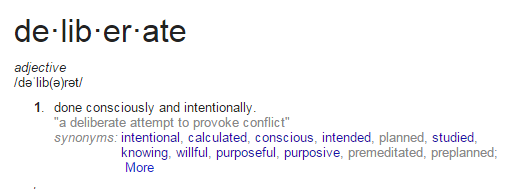
Dan (my pastor) was talking with a friend who asked if all sins are forgiven. He was asking about a specific sin (in this case, it was adultery) and was wondering just how much he could ‘get away with’ so to speak. My pastor’s response was this: “Deliberate sin is perilous to the soul.”
Now that’s something to pause on.
My sin, deliberate or not, will always be forgiven. This is what I say to myself when I am at the crossroads of temptation. I haven’t sinned yet, but it’s right there, tempting me. The choice is before me and I know that I want to do the thing which leads to the sin. And I feel, in some dark corner of my heart, this forgiveness is what allows me to sin. But allow isn’t even the right word, really. It’s more like “makes it acceptable in my own mind.” God’s forgiveness of my deliberate sin doesn’t allow anything. It just makes me know that I won’t be held accountable.
Ah, here is where the rubber meets the road for me. Not living a life of grace (I’ll get to that in a minute) means I am living a life of “sin = punishment”. But there is no eternal punishment for me. And if there are present consequences, I don’t see much of them. (There are some obvious consequences for more external sin, but I am referring to the sins that really only affect my own soul. The ones that are so easy to hide…) So basically, I am free to do as I like.
Obviously, this is putting the emphasis in the wrong place.
What this does mean – what this leads me to – is something I’ve known all my life. That my choice to sin or not can only be made with one thing in mind (from which all things flow): Is this what God deserves? (No) Is this honoring to him? (No) Do I love him above my own sin? (…probably not) If I did love him more than my sin, would I always choose him over it?
The answer to the last question feels like it should be “yes”. But it’s not, for one, it doesn’t taken into account the Fall.
Before the Fall, Adam and Eve could choose to sin or not sin. After the Fall, we became so broken that our hearts would always choose sin over obedience. And as this last weekend (Easter) reminded us, I am now free to resist that sin.
“There is therefore now no condemnation for those who are in Christ Jesus. For the law of the Spirit of life has set you free in Christ Jesus from the law of sin and death. For God has done what the law,weakened by the flesh, could not do. By sending his own Son in the likeness of sinful flesh and for sin, he condemned sin in the flesh, in order that the righteous requirement of the law might be fulfilled in us,who walk not according to the flesh but according to the Spirit.” Romans 8:1-4 (ESV)
Because of what Christ did, I no longer have the same relationship with sin I once did. As a disciple of Christ, I am no longer captive to sin. But sin is still very present in my heart and in the world around me. It will be until my death or the Lord’s return. The sin and the flesh are constantly fighting the Spirit; this is an effect of the Fall, and an effect of Christ’s death on the cross at the same time. The Fall broke me, Jesus reconciled me. But sin didn’t disappear, nor did the temptation to sin disappear. God just made it so I could fight off the desire to sin with the help of the Spirit.
My old self could not help but sin. My new self has a choice in the matter. But my new self is still broken, and is being renewed day by day (2 Corinthians 4:16). But it is not fully renewed. (Side note: one of my professors – Dr. Agan – calls our hearts’ “wanters” and often says in class “Our wanter is broken. It just wants the wrong things.”)
As I drove to church this evening, and pondered this whole issue and tried to figure out exactly where it was I was hung up – what the flaw in my argument, if you will, was – I figured it out just as I was taking my seat. The issue is that I want my sin to have an element of “I just can’t help it”. I want an out. And just as I want my sin to have that much power over me, I also must keep into perspective that my love for Christ is not as powerful as I want it to be. Because none of this is about my ability to do anything. It’s about my inability to do anything.
This is why deliberate sin is perilous to my soul. Because it lands me in a place of “The devil made me do it.” Instead of a place that says “Jesus can overcome it.” So the second reason why I will not always choose Jesus over sin is because I can’t.
So we have a bit of a conundrum, just like much of the Christian life. The “already/not yet” the “sinner/saint” the “God’s sovereignty/our responsibility”, the “faith/works”- all these antimonies (unresolvable tensions) exist in the Christian faith. This is not what is perilous to my soul. What is perilous to my soul is deliberately choosing to sin when Jesus gives me the power not to. It’s choosing to be the sinner when I can be the saint.
 Stephanie Nelson